What I Learned from the Films of 2023

It’s that time of the year when you either get optimistic for the upcoming new year or spiral into a neurotic reflection of the past year. I experienced a lot of changes along with many disappointments during 2023. I finally graduated college, took on a new internship, started therapy, and traveled extensively. Unfortunately, I’m still working the same warehouse job in the same hometown of Lancaster with the same minimal social circle. It’s frustrating comparing myself to the person over a year ago because, at first glance, little has changed.

At 25 years old, I’m young enough to turn myself around but old enough to feel like a stranger to my generation/peers. That outsider-ness sometimes makes life very lonely, even if there are people out there trying to reach me. It’s not a radical assertion to say the internet, social media, and the pandemic have isolated us from our common neighbor. The dwindling opportunities for socialization and community primarily fall upon church (house of worship) attendance or barhopping/clubbing. Religion has rightfully pushed many people away, while the bars often give way to cliques and immediate, half-drunken judgments rather than meaningful connections.

Though the loss of third places has been long documented for years (see Bowling Alone by Robert Putnam), the pandemic made their absence more widely noticed. And while it is not a sincere social space where you converse with others, the movie theater has become that space for me. I don’t have the money or energy to see every new movie released each weekend. However, when I have a free weeknight and desperately want out of my apartment, I go to the movies. The movie theater was my confidant, teacher, and healer this year.

I watched 24 movies this year, and I want to provide my opinion on them. Personal writing has been a struggle for me this year, but making a movie roundup is relatively easy. Unlike many doomerists, I saw plenty of solid films released to theaters. Perhaps we should lower our expectations, as we often judge an outcome or a piece of art with our immediate enjoyment before reflecting on its intentions and our biases. Therefore, instead of just giving a brief review of each film like most roundup lists do, I want to explore what I learned from each movie, even those that I didn’t particularly enjoy. The following list goes from worst to best.


24. Ant-man: Quantamania

  • The things you liked as a kid may no longer resonate with you. 
  • Memories, experiences, and cultural zeitgeist often influence your tastes. 

Review: It’s another installment in the Marvel movie that relies on you watching the previous 20 movies as it sets up the next five. Honestly, it’s not as bad as others say, but I think we’d like fewer but more inventive superhero movies.

23. Exorcist Believer

  • Paying lip service to a movement or theme (like feminism or community solidarity) doesn’t mean you contributed thoughtfully. Instead, you’ve cheapened them to shallow dog whistles.
  • Diversity doesn’t mean thoughtlessly including as many identities as possible in one project but creating more projects that explore specific identities and their intersection with society.

Review: My biggest (movie) disappointment of 2023. The Exorcist is among my favorite films, but this sequel doesn’t understand why the original is so good. I’m no longer religious, but Catholicism is central to this series. The utilization of other Christian denominations was incredibly superficial, and Ellen Burstyn was wasted.

22: Evil Dead Rise

  • Just because something doesn’t align with your tastes doesn’t mean it’s bad.
  • There are people who feel more like an outsider than yourself.

Review: I’m not a massive Evil Dead fan, but it fits nicely into the franchise. Alyssa Sutherland’s performance as the main deadite is a standout.

21: No One Will Save You

  • You ultimately must be your own rescuer and advocate. You must make your voice and dreams known rather than rely on others (or the system) to support you naturally. 
  • Sometimes artistic choices (and life choices) don’t work out, but it’s okay because you tried it. It is better to try and fail than never experiment.

Review: Good direction and acting, but nothing particularly memorable. The “creative choice” of having no dialogue mostly works beside a few scenes.

20: Napoleon

  • We should reconsider the historical “greats”. You don’t become powerful and noteworthy without being somewhat of an asshole or coming from privilege. 
  • It’s far easier to deal with physical confrontation than relational confrontation.

Review: A pretty standard Oscar-baity biopic that doesn’t really explain the historical context of its events. The scenes between Napoleon and Josephine are far more interesting than the battle scenes.

19: Creed III

  • You are not responsible for all the bad things that happen in another person’s life. Don’t diminish your struggles and triumphs.
  • However, understand the privileges that awarded your success and that many lack those avenues to success.

Review: Probably the weakest of the Creed movies, but I’m glad to see the Rocky movies take a new direction.

18. They Cloned Tyrone
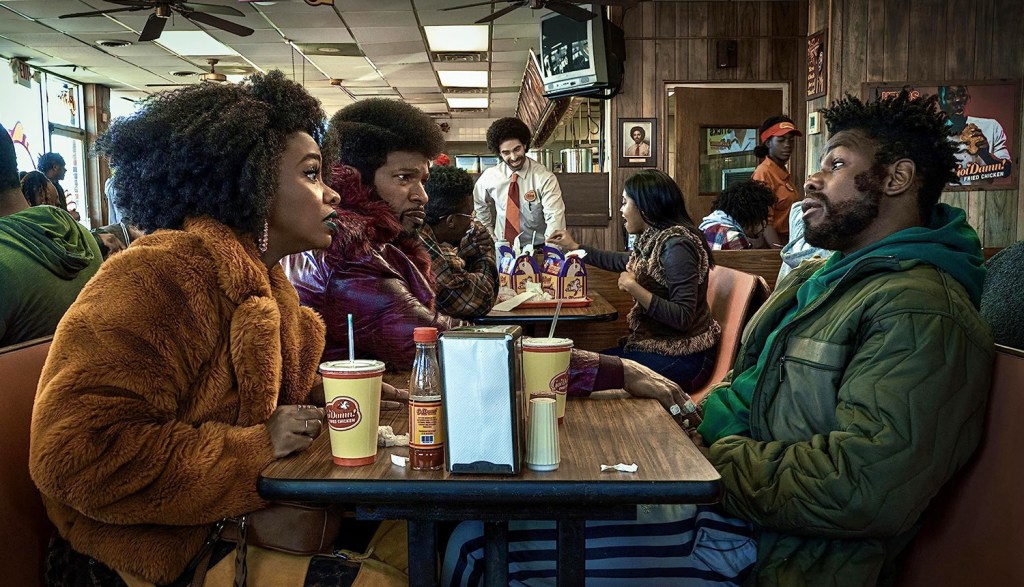
  • America created the ghetto and systematically maintained its existence.
  • The drug dealer, the pimp, and the prostitute are more threatened by the white middle class rather than the reverse.

Review: A fun little Twilight Zone-style allegory with fun characters. 

17: Godzilla Minus One

  • Love for one’s country isn’t jingoistic adherence to its government or culture. It’s love and compassion for your community and criticizing/challenging its flaws. 
  • When you’ve hit rock bottom, things can still get worse. But keep fighting.
  •   Don’t feel guilty for wanting to enjoy all life has to offer.

Review: A little overhyped for a non-Godzilla fan, but overall, it is better than most blockbusters today. I’ll take the post-WW2 commentary and characters over the monster action.

16: Asteroid City

  • Life isn’t a screenplay. We can’t always explain how events and life experiences influence our lives. It’s just life.

Review: Another Wes Anderson movie. Not his best, not his worst, but enjoyable nonetheless.

15. Saltburn

  • Are you spiteful or jealous of those better off than you? 
  • Don’t just use topical issues; actually say something about it.

Review: Mostly a style-over-substance movie. The class-disparity theme doesn’t say much in the end. Some “shocking moments” are warranted, while others are self-indulgent. Barry Keoghan and Rosamund Pike should both be nominated, though.

14: Guardians of the Galaxy Vol. 3
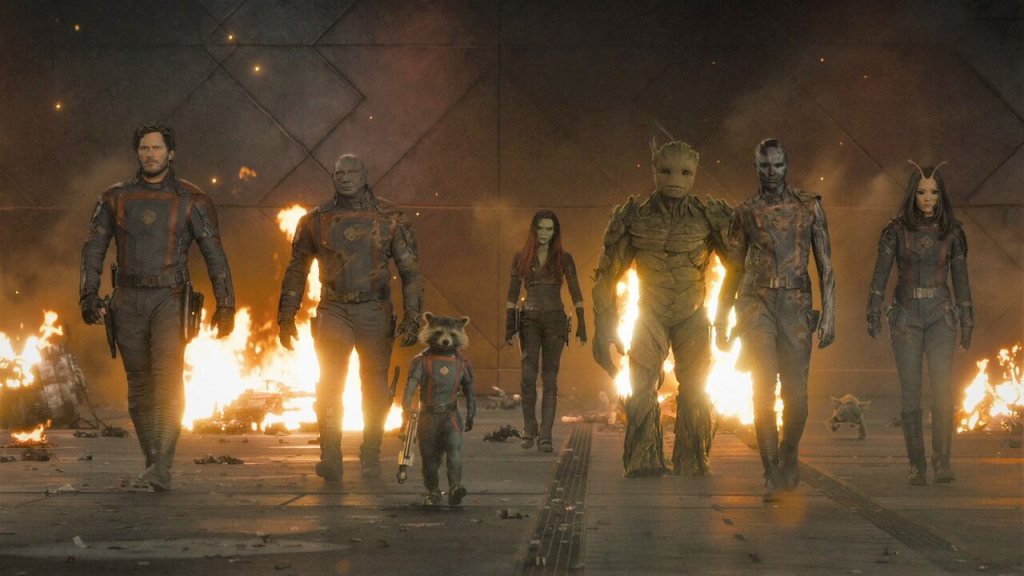
  • Imperfection is a feature of life, not a problem.
  • Even positive, fundamental relationships may need to end for real positive change.

Review: A satisfyingly small but emotional end to Marvel’s best film series. There’s real passion and creativity from the filmmakers and cast. Give me more intimate, wacky stories like this over crossovers requiring viewing homework.

13: Wham! (Documentary)

  • Be honest about who you are, and support others to be themselves.

 Review: I knew little about Wham! or George Michael before watching this documentary. I may not have come out of the film obsessed with their music, but I appreciate the 80s time capsule they captured. The film interweaves old footage with a 90s interview, making it far more authentic than most by-the-number music documentaries.

12: TMNT: Mutant Mayhem

  • It’s okay to have fun.
  • Ugly things still deserve love and compassion because we all have ugly parts.

Review: For being a very casual TMNT fan, I had a fantastic time with friends watching this movie. Mainstream animated films are finally taking creative swings, and I just loved the grimy, fun style of this movie. The characters who inhabit the NYC streets of this movie are purposely ugly yet lovable, and there’s a ton of 90s influence (especially with the music). This movie’s story isn’t revolutionary but delivers some much-needed heart. I had a great time with my buddies, and the style was right up my alley. 

11: Oppenheimer
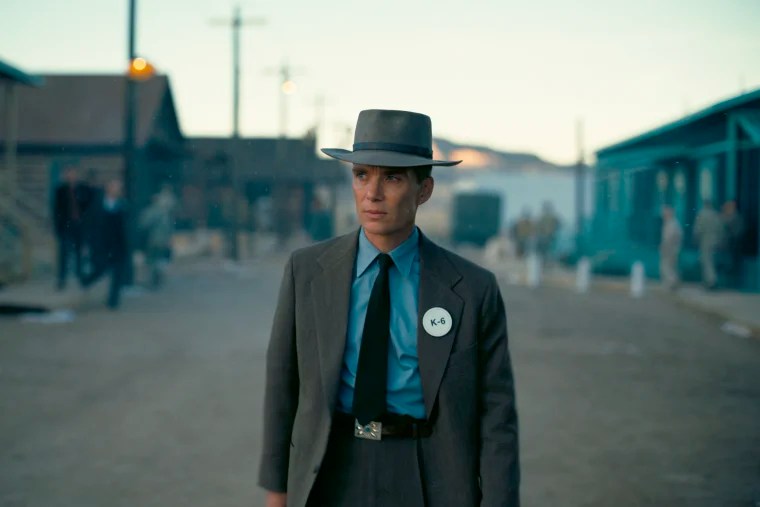
  • Those in power will abandon you once you’ve outlived your usefulness.
  • It’s far easier to be doom and gloom, (and celebrated for it) than positive these days.

Review: Like many film bros, I was a Christopher Nolan shill at one point. Nowadays, I can respect his filmmaking but disagree with his ultimate statement in each film. Though the first half of this film is quite intense with the bomb’s creation, I was more engrossed in the second half‘s coverage of the security hearing. Still, I think Nolan unnecessarily ends the film quite bleakly and maybe cuts Oppenheimer more slack than he deserves. Also, both Robert Downey Jr. and Cillian Murphy should be nominated.

10: Barbie

  • Some people will just be angry no matter what.
  • Your career, social circle, or interests don’t make you who you are.
  • Replacing a hierarchical system with another won’t improve things.

Review: The worldwide love of the Barbie movie is justified. It was probably the funniest movie I saw this year while including some essential feminist and existential themes you wouldn’t expect in a traditional blockbuster. It may be a giant commercial and marketing shift for a mass-produced toy. But then again, why can’t a movie be both entertaining and cathartic?

9: Talk to Me

  • You can empathize with people going through trauma, but ultimately, they must take responsibility for their choices and impact on others.

Review: I’ve encountered the Philipou brothers’ YouTube page several times over the years but never particularly enjoyed their videos. Here, they made a much quieter and more thoughtful horror movie than I expected. Its montage scene and ending turn this into a new horror classic, in my opinion. While most horror films share themes of trauma nowadays, this provides an honest look and criticism of its effects on addiction.

8. Still: A Michael J. Fox Movie
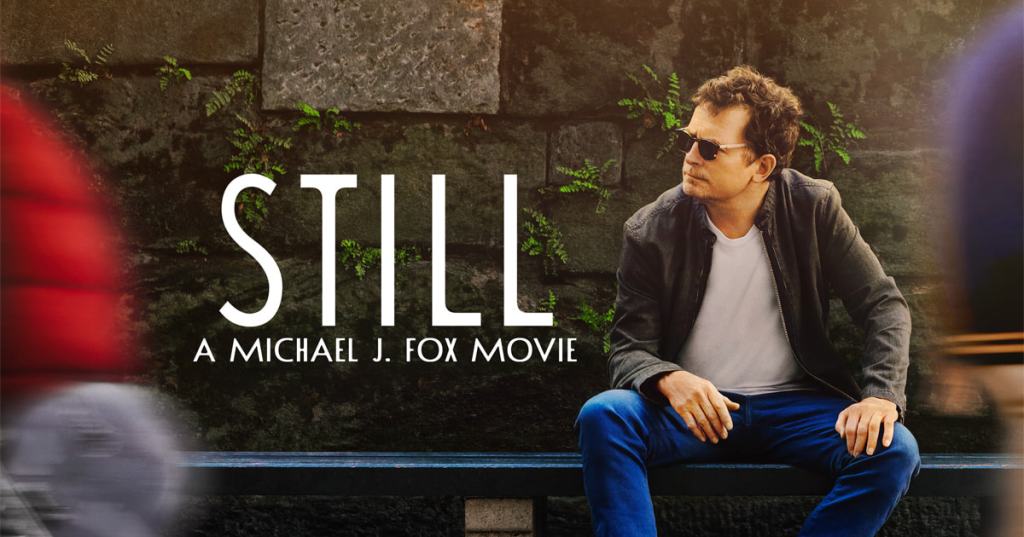
  • Keep pushing forward because life keeps going on.
  • Don’t take yourself too seriously.

Review: This isn’t the first nor last time Michael J. Fox will share his struggles with Parkinson’s, but it had some fascinating editing. While the film contains traditional interviews and reenactments, the documentary occasionally splices Fox’s recollections with scenes from his filmography that mirror the story he’s telling. It works tremendously well despite knowing the actual context of those scenes.  Throughout all his interviews, Fox remains humble and humorous, never inviting pity or worship. I may not have sought this movie if this were another public figure, but Fox is a personal exception.

7: A Thousand and One

  • You can’t ever imagine what some people must struggle through in life.
  • I should consider the problematic nature of my poverty fetish.
  • God bless mothers.

Review: I only discovered this movie’s existence after it appeared in reviews by both the New York Times and The New Yorker. Though it reminds me a lot of Moonlight, this film entirely focuses on the fraught relationship between the single mother and her son. The film also highlights New York’s ongoing gentrification without calling attention to this theme. Teyana Taylor’s performance has not been discussed as much as it deserves because she should nominated, in my opinion. A twist in the final few minutes left me floored and had recontextualized everything. This movie deserves more attention. Seek it out.

6: The Boy and the Heron

  • Things may not be passed on to the next generation, and that’s okay. They deserve to make their own decisions.
  • See both the beauty and horror in life. We can’t appreciate/abhor one without the other.

Review: I’ve only seen a couple of Miyazake’s films, but I can understand the man’s legacy in animation. As expected, the animation is both beautiful and unsettling at times, which helps foreign audiences connect with the unexplainable fantasy world he creates. It’s not my favorite of his, but the ultimate message on how to live and how to leave the world is a refreshing antithesis to nostalgia. Instead of holding on to what we’ve created, let the new generation chart their own course.

5: Poor Things

  • The only way to truly understand existence is to experience all the world’s wonders, horrors, hypocrisies, and kindnesses.
  • Explore life like a scientist. Experiment and question the systems society has instilled. 
  • People we love may make choices we disagree with but do not believe you know better about themselves than they do.

Review: For many, this movie is far too weird and twisted. Others, like myself, will find the beauty in its monstrousness. The film is gorgeous yet simultaneously offputting. The innovative camera shots, victorian/gothic art direction, and tense editing made me uneasy. At first, I feared the film was weird for weird’s sake. But the film soon asks some insightful questions on the study of philosophy and the structure of sex work. Emma Stone is absolutely Oscar-worthy, while every line out of Mark Gruffalo had me howling with laughter. If someone is bored with “today’s movies,” show them this. 

4: Killers of the Flower Moon
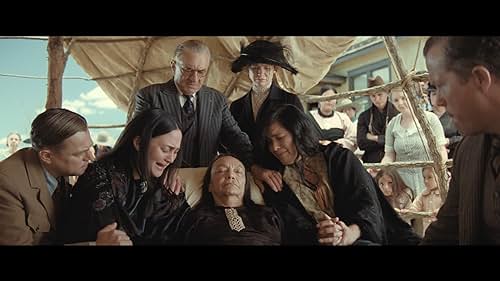
  • People may think they do things out of love, but that doesn’t justify their horrible actions.
  • When do we share the stories of others, and when do we let them share it themselves? Unfortunately, it requires someone powerful to advocate for the overlooked.

Review: Though I find Scorcese’s gangster/crime movies repetitive, I typically love his more divergent films. Silence, Hugo, Taxi Driver, Cape Fear, and The Last Temptation of Christ interest me far more than The Wolf of Wall Street, Goodfellas, or The Irishman. Killers of the Flower Moon is up there as one of his bests. Scorcese often uses unlikeable protagonists, but this was the first time where I felt their humanity never invited empathy. Though Dicaprio and DeNiro are exceptional, Lily Gladstone gave the best performance I’ve seen all year. Her presence is always felt without demanding attention from bombastic actions. And while the Osage people deserve a version of this movie created by an Osage filmmaker, I can’t condemn the film released. I think he addresses this dilemma in the final few moments with the radio show scene. I’m just glad these tragic, true stories are reaching the public consciousness. America has done too fine a job of covering up our atrocities.

3: Past Lives

  • You can’t obsess over what could have been. This is life now.
  • Every decision and choice will come with joys and pains. Part of life is learning to live with those consequences and still recognizing you made the decisions you did for a reason.
  • Share uncomfortable, painful truths. 

Review: For being a foreign language romantic drama, I don’t think I heard more hype for a movie this year than Past Lives. After months and months of waiting for it to hit streaming or appear in a nearby theater, I finally watched it on Prime. And yeah, it’s excellent and heartbreakingly honest. There’s so much empathy in this movie for all its characters. People who are clearly flawed but self-aware. As someone who regrets the past few years and constantly ruminates on “what could have been,” this movie hit me hard. It’s easily the best screenplay I’ve seen all year.

2: The Holdovers
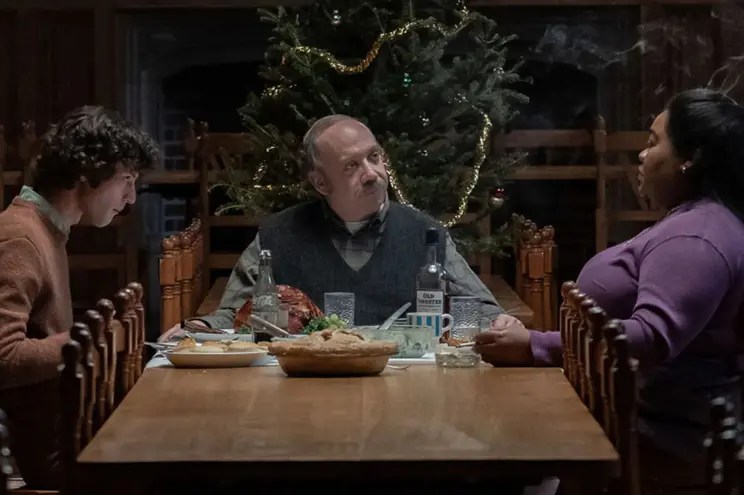
  • The younger and older generations have little to learn from each other. Empathy for those we already judge.
  • You’re not owed anything. Recognize and appreciate your privileges.
  • Stop worrying and feeling ashamed of what you could’ve achieved. Enjoy life now.
  • It’s okay to slow down and just vibe.

Review: This is such an “old man” movie, and I loved it. The 70s setting and style at an East Coast prep school perfectly fit my personal tastes. It’s a perfect feel-good Christmas movie that’s neither schmaltzy nor sentimental but still warms the heart. It won’t make everyone’s favorite lists, but that’s alright. Take your parents and grandparents to see it, and you’ll all have a good time.

1: Across the Spiderverse

  • Don’t let societal structures and expectations dictate your life. “Do your own thing”.
  • Don’t accept no-win scenarios.
  • Stop seeking approval and belonging from people who don’t accept you. Some friends won’t have your back, while a stranger may.
  • Embrace individuality and diversity. Every person brings something important to this world.

Review: Now, I’m pretty biased as both a massive Spider-Man fan and a fan of the first film, which is one of my favorites. Once again, the animation is revolutionary, surpassing the high standard set by the first film. Surprisingly, its story functions on so many different levels. A blockbuster, animated superhero movie somehow tackles identity, free will, black solidarity, systematic oppression, totalitarianism, parenthood, etc., seamlessly and entertainingly. I could write about this movie for months, but plenty of people have already done so. Even if you’re not into superheroes or “kids movies,” check this out. Everyone can find something to latch onto in this movie.


And that’s my list. These films ranged in tones, styles, and outlooks, but I consistently came out of each learning I needed to love myself more and take personal risks going forward. It’s a brand new year and time for me to move on. Move on from bad friendships, move on from past mistakes, move on from world expectations, move on from outdated systems. It may be an obvious, often-said message, but one we often overlook in today’s world. We’re scared of the unexplainable around us and want to latch onto some answer. The horrors of war, climate change, and inequality are absurd features of existence we don’t know how to fix. We seek validation or model our routines off our revered peers of others. The unknown is terrifying, but the world continues to spin. You won’t die answering all the difficult questions of the world or leaving a utopia/dystopia for the next generation. But you experienced it. Take advantage of all the experiences and stories you can. 

Thanks for reading, and happy New Year everyone. I hope 2024 adds a few stories to your life catalog.
Trust Thy Neighbor and Invest in Local News

Originally written on 3/30/2022

Today, you’ll unlikely find people perusing the daily newspaper when you step onto the train or walk into your local coffee shop. Instead, they’ll be scrolling through their phones or laptops, consuming news from social media. In numerous ways, we’ve reached an information utopia; anyone from anywhere can instantly transmit content without the constraints of location and expense. However, how much of your newsfeed concerns your local community? Probably not much. Over half of all counties across the United States support one or fewer newspapers– most of them only publish weekly (Abernathy, 2020). These locations without papers are called News Deserts. “Since 2004, the United States has lost one-fourth – 2,100 – of its newspapers.” The New York Times, The Washington Post, and USA Today maintain a large subscriber base; yet, these publications explicitly target a national audience.  In contrast, local papers inform communities of regional events, watchdog municipals and businesses, and generate discourse amongst neighbors. The disappearance of these local publications advances a grim future for American Democracy.

Some argue traditional newspapers should naturally fade underneath Madison’s marketplace of ideas theory which claims, “the truth will emerge from the competition of ideas in free, transparent public discourse.” The first amendment affords the Press vast amounts of freedom because a democracy cannot thrive without an informed public. Though not ideal, our news organizations must still operate primarily as businesses. The internet radically disrupted the economies of local papers stealing both consumers and advertising.

In self-preservation, papers must shrink their publication days or merge with other papers. This necessitates staff cuts and minimal page real estate. Smaller staffed papers now cover a broader area; editors must slash potential reports. The reporters disconnect from the communities they once served by writing for a wider audience with more scandalous stories. Without an informed populace, a neighborhood no longer governs itself. 

Five papers reside within Lancaster County (where I currently live), yet, LNP acquired all these publications within the last decade. In 2009, Lancaster City’s two warring papers, the Intelligencer Journal– the seventh oldest newspaper in America– and the Lancaster New Era, merged into LNP. Each paper leaned opposite the other on the political spectrum but still served a majority white, evangelical population. While I’m grateful for a functioning paper, LNP reflects only a portion of the Lancaster demographic which now incorporates large segments of immigrants and refugees. No, non-English-speaking paper exists for the diversifying population.

Some may debate with me and assert the news media holds more power and influence than ever. I understand your reasoning. Wealthy news broadcasters like CNN, NBC, or Fox News reach millions of devoted viewers/readers every day. On first instinct, an outsider would find a highly informed populace. Unfortunately, our knowledge encompasses very little. For example, you can probably name multiple members in the legislative and executive branches of the United States. But can you name your local borough council members? Individuals share strong convictions over controversial topics – critical race theory, Israeli-Palestinian conflict, climate change – despite their nominal impact on most communities. Local construction, school ordinances, and organization cover-ups go overlooked, leading to events like the Catholic Archdiocese of Boston sex abuse scandal.

I understand these local issues may not sound enticing or sensational. But that sensationalism can lead to war (google search William Randolph Hearst for a history lesson). Local headlines are far more critical to the average American than national politicians debating transgender athletes, election fraud, etc. Similar to filing taxes, remaining updated on current events remains a fundamental responsibility for Americans.

National news leads citizens to form alliances around political beliefs rather than their neighbors. Social media only enhances these divisions. According to a Pew Research study in 2021, of Americans in the 18 to 29 age bracket, 43% say they receive news from social media sites.

That statistic terrifies me.

Everyone knows algorithms build our online news feeds. People may hate the elitism of some papers, with many implying their popularity and wealth contest their credence. Nonetheless, the history and reputation of these papers rely on journalists following ethical reporting guidelines, whereas on social media, success hinges upon likes and shares. Independent publishers/bloggers may quickly spread misinformation since no vetting exists, and anyone who challenges the misinformation colludes with “mainstream media,” according to their followers. When someone declares, “You can only trust me,” I’ve discovered they’re likely untrustworthy.

Now, I’m not necessarily advocating a return to the physical newspapers; social media and the online format can improve the news’s speed, cost, and efficiency. But we still need updates on local issues, events, and policies. Our regional newspapers can only adapt to a modern environment with investment from locals. They need support from us. So, subscribe to your closest local newspaper, whether it’s digital or physical. And please, read them! I admit I don’t read LNP daily, but your understanding necessitates engagement. If your local publication uses social media, leave likes and comments. As the audience, we can demand more information or scrutiny from our journalists. Don’t shy away from criticism. Instead, challenge reporters without ignoring facts.

National change starts within our communities, and we rely on newspapers to inform our decisions. To #stayinformed, I implore you to subscribe to your local paper/publication. National news corporations and #newsdeserts destroy our social bonds by discouraging neighborliness. You should #thinklocally and #actlocally by funding local journalism.


Bibliography

Center for Innovation and Sustainability in Local Media, and Penelope Abernathy. “Vanishing Newspapers -.” The Expanding News Desert, UNC Hussman School of Journalism and Media, 29 June 2020, www.usnewsdeserts.com/reports/news-deserts-and-ghost-newspapers-will-local-news-survive/the-news-landscape-in-2020-transformed-and-diminished/vanishing-newspapers.

“Crucible of Empire : The Spanish-American War – PBS Online.” PBS, Public Broadcasting Service, 1999, https://www.pbs.org/crucible/frames/_journalism.html.

Peña, Maria, and Noticias Telemundo. “Puerto Ricans Who Fled Hurricane Maria Find a Home in Pennsylvania’s Amish Country.” NBCNews.com, NBCUniversal News Group, 30 Sept. 2020, https://www.nbcnews.com/news/latino/puerto-ricans-who-fled-hurricane-maria-find-home-pennsylvania-s-n1241565.

Rezendes, Michael. “Church Allowed Abuse by Priest for Years – The Boston Globe.” Edited by Walter Robinson, BostonGlobe.com, The Boston Globe, 6 Jan. 2002, https://www.bostonglobe.com/news/special-reports/2002/01/06/church-allowed-abuse-priest-for-years/cSHfGkTIrAT25qKGvBuDNM/story.html.

Shearer, Elisa. “More than Eight-in-Ten Americans Get News from Digital Devices.” Pew Research Center, Pew Research Center, 12 Jan. 2021, https://www.pewresearch.org/fact-tank/2021/01/12/more-than-eight-in-ten-americans-get-news-from-digital-devices/.

Strasser, Franz. Lancaster, Pennsylvania: America’s Refugee Capital. BBC News, BBC, 27 Jan. 2017, https://www.bbc.com/news/av/world-us-canada-38776233. Accessed 10 Apr. 2022.

America, Expand the Working-Class Narrative

Originally written 3/2/2022

At a 2016 political rally for presidential nominee Donald Trump, hundreds cheered as the billionaire briefly placed a coal miner’s helmet atop his head during his speech. The fashion statement invoked the classic image of the American working man: Grizzled, stoic, and white. This image, which once dominated the American landscape, reflects stereotypical blue-collar jobs like construction, mining, and factory lineman. However, this demographic no longer reflects the bulk of working Americans. Tamara Draut, Vice President of Policy and Research at Demos, wrote in a Guardian article, “the working class shifted from “making stuff” to “serving and caring for people.”” So service industry employees: fast-food cashiers, grocery-store stockers, and clerical workers now formulate the majority of this income bracket. Single mothers, minorities, and recent graduates fill these roles rather than exclusively white, adult men. Yet, the romanticization of white working-class families (think the Conners from Roseanne) rarely carries over to employees in the service sector. Customers instead hold these workers to higher standards, expecting nigh perfect service as the norm. Despite many service workers relying on tips (a noncompulsory choice for the customer), the public derides wage increases to unskilled positions. Neither of these groups receives genuine respect from the wider public or politicians. Traditional blue-collar jobs still exist and fail to support families– mainly stemming from the rust belt. However, all these individuals experience disadvantages in our flawed economy. No group should eclipse the other.

Though I face routine monetary struggles, I’ve afforded a decent dose of privilege in my life. I work part-time at a Costco warehouse, a setting often regarded as blue-collar. My circumstances allow me to maintain a sustainable standard of living while simultaneously paying for college. For many of my coworkers with more responsibilities, though, they barely scrape by. Additionally, my love of Charles Dickens novels, the kids-cartoon Hey Arnold, and the short stories of Raymond Carver– all narratives focusing on impoverished characters- informed my empathy growing up. My family’s financial situation continues to alter, but I’ve witnessed their polarization as income inequality and healthcare remain central in most political discourse. While some amount of inequality will always remain in a capitalist structure, America will never create effective change without class solidarity. Recent events may help knit divided working Americans if they recognize each other’s commonality.

To claim white, blue-collar workers are the only struggling Americans is comparable to claiming breast cancer is the only cancer. Just because breast-cancer patients struggle and maintain a strong advertising campaign doesn’t negate the existence and struggle of other cancer-type patients. We should invest in all types of cancer research, not just breast cancer. Similarly, we should vote for robust policies and regulations that protect the entire-working class, not solely those that maintain parting industries.

America championed its “essential workers” at the beginning of the Covid-19 pandemic. But the praise waned as workers decided not to return to their companies once the nation returned to relative normalcy. The Great Resignation (as it’s dubbed) led to supply-chain issues and understaffed businesses. The consequences of labor shortages left the broader public– mostly unsavory customers– lambasting the once celebrated workforce. New McDonald’s employees received almost double the minimum wage ($7.25) in parts of the country, which frustrated white-collar professionals whose salaries looked fairly similar. Many politicians accused the stimulus checks most Americans received kept people from working; why work when you can make more sitting at home? But this argument holds little relevancy as most state stimulus checks ceased while the Great Resignation continued.

Current service jobs entail more than just “flipping burgers” or “scanning groceries.” The speed and expansion of the internet encourage Americans to expect more products at lower prices and in minimal time. Service employees live under extreme time crunches, yet these environments are considered normal. Before the pandemic, New York Times Reporter Andy Newman worked as a bike deliveryman for app-based food services. In addition to facing the dangers of the road and meeting disrespectful customers, he received no tip for almost two-thirds of his 43 deliveries (Newman, 2019).

But who is considered the working-class anyhow? No, definitive or widely accepted criteria exist despite many economists’ attempts. It’s instinctive to categorize working-class individuals by income or occupation, but one must remember the variations in living costs across the United States. Living in New York City is more expensive than living in a small Texan town. Many Economists will claim “working class” defines members of the labor force with less than a four-year college degree. Education is a more stable determiner than income or occupation, yet far from comprehensive. Recently elected New York City Mayor Eric Adams described cooks, dishwashers, and Dunkin Donuts workers as “low-skill” in a 2022 press conference. Vox journalist Jerusalem Demsus speedily decried Adam’s description. She argued, “By implying low-skilled workers inherently don’t have the academic chops to do the higher-paid, remote, work-from-home jobs, Adams succumbs to a common error: Believing that skill (not supply and demand for particular types of labor) is what differentiates higher-paid office workers from in-person service laborers.” Demsus later cites a New York Federal Reserve survey showing that about 40% of recent college graduates were underemployed or worked jobs that required no such degree (Demsus, 2021). Furthermore, blue-collar workers hold distinct skills despite their income.  According to a 2018 Washington Post analysis, “Only 13.9 percent of workers are employed in blue-collar professions, vs… 71.1 percent in the service sector.”

In contrast, let’s look at the definition of the middle-class. The Pew Research Center defines the middle class as households earning between two-thirds and double the median U.S. household income: about $48,500 to $145,500 in 2018 (Bennett, et al. 2020). So, one could contend anyone below this income bracket constitutes working-class. Once again, this definition fails to recognize differences in living costs across the nation.

No matter the criteria, it’s clear the definition reaches beyond workers in the industrial and construction sectors. The fundamental issue arises when the public judges employees as lazy or entitled based upon their occupation. Nobody will deny blue-collar Americans “work hard”; they arrive home sweaty, dirty, and often injured. These Americans work in dangerous environments with toxic chemicals or complex machinery, only to return home and barely support their families. If they survive to retiring age, they’ll often develop underlying health issues from their harsh environments. Unfortunately, the public doesn’t recognize the similar health issues plaguing retail and service workers. While the physical labor may not be as intense, spending eight hours dashing across a kitchen or grocery store still wears on the body. These workers are covered in oil burns and blisters rather than soot and callouses.

On top of the physical labor, service employees simultaneously deal with customers while most blue-collar employees work in isolation with one another. Customers expect friendly and obedient service regardless of their behavior. Since their tips reward employees’ performance, customers maintain all the power in the “transaction.” The psychological labor of maintaining an excitable, friendly demeanor for eight hours of physical labor coupled with angry/impatient customers becomes equally exhausting.

So why don’t these employees search for better jobs? As Demsas stated earlier, garnering an education in trade or undergraduate degrees seldom matters if the demand for high-skilled jobs remains low. Even if a worker sought an education, minimum wage pay only affords a citizens’ basic needs. Moreover, these low-wage jobs can’t (or won’t) provide healthcare to their employees. And still, somebody must work these jobs. Nobody can buy groceries if there’s nobody to stock the shelves or unload delivery trucks; nobody can order food if there’s no server to write down your order.

So why, when politicians speak to helping the working class, they only highlight workers in the industrial industry? Truthfully, many of these industries are on the decline. As technology rapidly evolves towards automation and America switches to more sustainable energy, these once mega-profiteering corporations in coal mining, steelwork, and lumberjacking are disappearing. Even highly industrialized farms mirroring factories replace our local agriculture. When we look deeper into Republican politicians, many corporations from these sectors fund these politicians. The money generated from an unregulated market economy supports the dying businesses and their investors but rarely trickles down to its employees. Equally, Democrats – once considered the working-class party– encourage globalizing the economy. Production becomes cheaper as jobs shift overseas, and advancing technology eradicates the need for simple manual labor. Democrats constantly push for cleaner, sustainable energy, eliminating fossil fuel industries. We cannot ignore the existential threat of climate change, yet, this shift leaves employees of the dying industries unemployed and untrained. Blue-collar workers recognize the threat, necessitating votes for politicians who will keep their corporations alive. I feel fossil fuel industries need to shrink significantly, but the government should retrain workers in sustainable industries to counteract the job loss.

Ultimately, pro-worker policies require public support and activism. No politician or party will fix inequality issues unless the public pressures the government, but the public must share common goals beforehand. The working class doesn’t exclusively include white, grizzled blue-collar workers; many more Americans suffer equally. The single-mother waitress, the Hindi postgrad stocking shelves, and the white, grizzled coal miner share more commonalities than with the business CEO-turned-politician playing dress-up. Topical social issues matter but shouldn’t take precedent over financial issues directly impacting Americans. Hopefully, by expanding our definitions, we’ll utilize the opportunities afforded by “the Great Resignation” to shift our conceptions of workers and labor itself. Our careers should facilitate Americans to explore their best lives, not the other way around.


Bibliography

Bennett, Jesse, et al. “Are You in the American Middle Class? Find out with Our Income Calculator.” Pew Research Center, Pew Research Center, 23 July 2020, https://www.pewresearch.org/fact-tank/2020/07/23/are-you-in-the-american-middle-class/.

Demsas, Jerusalem. “Stop Calling Workers ‘Low Skill.’” Vox, Vox Media, 11 Jan. 2022, https://www.vox.com/22871812/eric-adams-aoc-low-skill-workers.

Draut, Tamara. “Is This Your Image of the Working Class? You Need to Update It .” The Guardian, Guardian News and Media, 9 May 2018, https://www.theguardian.com/commentisfree/2018/may/09/american-working-class-what-it-looks-like-today.

Long, Heather, and Andrew Van Dam. “Under Trump, the Jobs Boom Has Finally Reached Blue-Collar Workers. Will It Last?” The Washington Post, WP Company, 9 Sept. 2018, https://www.washingtonpost.com/business/2018/09/09/under-trump-jobs-boom-has-finally-reached-blue-collar-workers-will-it-last/. Newman, Andy. “What Our Reporter Learned Delivering Burritos to New Yorkers.” The New York Times, The New York Times, 21 July 2019, https://www.nytimes.com/2019/07/21/reader-center/insi

Lancaster City Prepares for Influx of Homeless Populations

By Chad Barthe

Aug. 11, 2021

Lancaster, PA– Tammy Rojas, an executive member from the Lancaster County Homeless Union, along with other organizations are preparing for the fallout of the eviction moratorium. “We know it’s coming. It’s going to happen eventually. Again, we’re not the class in power”, Rojas said.

While the Biden Administration’s extension on the eviction moratorium has left many relieved across Lancaster County, it has only prolonged the inevitability of its ending. The moratorium is extended till Oct. 3, however, this will only continue if the spread of COVID-19 in Lancaster remains at or above its current rate.

Rojas also spoke to the new number of individuals who will face these evictions. While some people have experienced homelessness before, many will be experiencing homelessness for the first time.

“The reality is we’re not going to be able to save everybody because again, our system is not set up to do so, it’s not set up for the well-being of the people. It’s set up to look through the lens of the need to create capital. I’m looking at the realistic-ness that encampments are going to grow.” Rojas said. She’s warned that the community needs to be prepared to help support and organize these new homeless populations.

For the last three years, homelessness has been on the rise in Lancaster City. The last official recording in 2019, found that 422 people were homeless in the city. It’s below the over 600 homeless documented in 2009 and 2010, yet there’s been no clear statistics on the impact of COVID-19 over the past year.

According to a survey by United Way of Pennsylvania, over a quarter of Lancaster County Residents are living paycheck-to-paycheck and could easily lose their homes. The poverty rate is twice the state average at 24%.

Many of the houseless individuals congregate in Binns Park, next to the Lancaster County Government Center at 150 N. Queen St. These individuals are much more susceptible to drug use and mental health issues.

The union has repeatedly advocated for public restrooms after the 2013 death of Gregory Baynes. Bayes had schizophrenia and was known for panhandling in the area. Baynes was shot by officers during an altercation, after he was approached for publicly urinating.

 “We’re paying with our lives because something, as simple as we don’t have public bathrooms,” Rojas said. She also mentioned other ordinances supported by local organizations that cracked down on panhandling and food distribution that easily target poor and homeless individuals that can’t afford these fines.

Many residents who can’t afford these fines are instead placed in the Lancaster County Prison. Mathew Rosing, Rojas’s partner, spent fourteen months in prison unable to pay cash bail. He was eventually found not guilty and released from prison. In February, Rojas was also threatened with incarceration for $60 worth of parking tickets while sick with COVID. The Lancaster County Prison is constantly overcrowded causing city officials to rapidly progress the development of a new 45-acre prison, fifteen times the size of the current prison.

Programs like the Lancaster Bail Fund have attempted to remedy these issues. Started by former Lancaster Attorney Michelle Akritas, the organization is a revolving bail fund and advocacy group hoping to end pretrial detention across Lancaster County.

However, the volunteer organization is in its infancy. It completely runs on donations and has yet to start posting bail. In May, Warden Cheryl Steberger claimed 66% of the prisoners being held at Lancaster County Prison were being held pretrial.

While many critics may laud shelters and organizations like the Water Street Mission, Rojas was more critical of similar religious-run programs. “They think their program is an improvement and helping but really it’s leaving a lot more people out than it is helping,” she said. She noted how countless offices and shelter space across the city could be used for housing. Yet, she’s more disappointed with the city’s prioritization of upscale housing like the Willow Valley Mosaic, Lancaster Press Buildings, North Shippens Place Condominiums and a new high-rise by Berger Rental Communities.

The former St. Joseph Hospital site is undergoing redevelopment into affordable housing, but Rojas has her doubts about the project.

Curtis Yon, who worked in the non-private sector for nine years, spoke at a city council meeting in July. “Poverty is a systemic choice, the money is here,” Yon said. He explained that Tabor Community Services raises tens of thousands of dollars every year yet has had a minimum of 10 empty rooms since 2018. While the resources are there, the local government hasn’t used them to address leadership. He warned the city council members multiple times of the incoming influx of homeless individuals following the moratorium. Rojas also argued that the U.S. needed an organizer in charge during this pandemic not a politician.

When asked if any groups were disproportionately affected in Lancaster compared to the rest of the nation, Rojas admitted she didn’t find much difference from community to community. As part of the larger National Union of the Homeless, most of her reports support that people of color, LGBTQ, and veterans are disproportionately affected across the system. Yet, poverty still affects a diverse group of individuals with half the city is financially struggling. “We are the majority, but we are not the priority,” Rojas Said.

Unfortunately, due to the recent gentrification, poverty and issues with healthcare providers Rojas is unable to afford living in Lancaster. For Tammy, Lancaster is the only home she’s ever known, but now her and her partner must move to Dauphin County. “I had to go take up somebody’s offer to go stay with them. So, I’m being pushed out of Lancaster, you know, I’m one of many that this happens to,” Rojas said.

Activists Demand City Council Prioritize Fighting Poverty

By Chad Barthe

July 28, 2021

Lancaster, PA– About a dozen members from Put People First PA and the Lancaster County Homeless Union attended Tuesday’s city council meeting. Although they were not on the agenda, the group challenged council members over the impact of recent infrastructure regulations that have gentrified neighborhoods and kicked low-income residents out onto the streets.

The activists claimed that Franklin and Marshall College found that nearly 48% of Lancaster City Residents are poor or low-income. The United States Census Bureau found the Lancaster poverty rate is 26.5%, more than double the state’s rate.

Tammy Rojas, 44, is the PPF PA’s leader in Lancaster City and an executive leader of Lancaster County Homeless Union. Before the meeting, Tammy guided and assured some of the newer attendees as to the trajectory of the night. The group ranged in age, ethnicity, and political leanings.

The Office of Neighborhood Engagement began the meeting with a highlight of the city’s diversity and community building efforts, with the rest of the agenda consisting of an ordinance passing new legislation that would increase the salary of the Mayor in the 2022 election and a revision to water shut-off notification procedures and COVID-19 construction regulations.

The activists were easily perturbed by these legislation proposals citing these updates should not be a priority during a housing crisis and only confused residents more. One gentleman eventually left during the middle of the meeting, making Tammy lose one of her testimonies.

When the council came around to Public Comment, about seven members read speeches on the stand. Despite a three-minute limit, most presentations went overtime or overlapped one another.

Tammy herself was the first to speak, demanding that the city government make fighting poverty a priority. She criticized all levels of the American government for their mishandling of the pandemic and designation of relief to healthcare profiteers. She also criticized Penn Medicine’s mishandling of her contraction of the COVID-19 virus.

In another speech, Mathew Rosing detailed his experience spending 14 months in the Lancaster City prison. He was denied bail because he was homeless but eventually found not guilty and released. He said, “I sat in prions for 14 months because I was homeless. The city’s heart is dying.”

Jessica Lopez also voiced concern multiple times throughout the meeting. Lopez worked at Catalina’s Bar and Grille until the owners were forced to sell their liquor license in the middle of July after dozens of police-involved incidents, including a shooting. The bar was quite popular amongst racial minorities in the city. Lopez accused the county of racial profiling, as multiple bars experienced similar shootings and instances of violence without any pressure for them to close. In her free time, Lopez closely works with Mickey’s Mission of Hope.

Michelle Uleary, head of Mickey’s Mission of Hope, was also vocal throughout the meeting. The organization feeds homeless residents that congregate in Binn’s Park. During her comments, she said, “Yes I’m shaking because I’m angry not because I’m scared.” She questioned why churches were allowed to hand out food without push back from the City while police sought to arrest her. She additionally admitted she’s been attempting to reach Mayor Sorace’s office for over two years.

Dennis Garrett, a veteran, currently living at the Lancaster Transitional Living Center, delivered a controversial statement. He encouraged the council to work with the federal government in deporting illegal immigrants that he believes are bringing COVID-19 into the nation. Garrett’s tirade caused many activists in the crowd to walk out and sparked aggressive arguments among a few.

Vinnie Rosarini moved with his family from Puerto Rico in 2015. He spoke extensively about his mother’s difficulty in finding suitable work despite her teaching experience and degree. He said how his family expected to be part of a diverse community but only found the same institutional corruption. He advocated for the council to focus on the poor, minority communities who struggled the hardest during the COVID-19 pandemic. He ended his speech by saying, “When we lift from the bottom, we all rise.”

Multiple more PPF members spoke throughout the night, repeating the same critical arguments until council Vice President Pete Soto closed public comment. Afterward, many activists expressed a willingness to cooperate with the local government to help bring relief to struggling residents. Yet Tammy, and many others, felt that change was impossible without systematic change.

Lancaster City Council meetings are held every 2nd and 4th Tuesday of the month and are open to the public. All meetings are streamed live and posted on the City’s Youtube page.

Future events and information can be found on Put People First PA and Lancaster County Homeless Union’s Facebook pages.